

 ITAL LIFE
 EARTH’S CREATION
 NACHER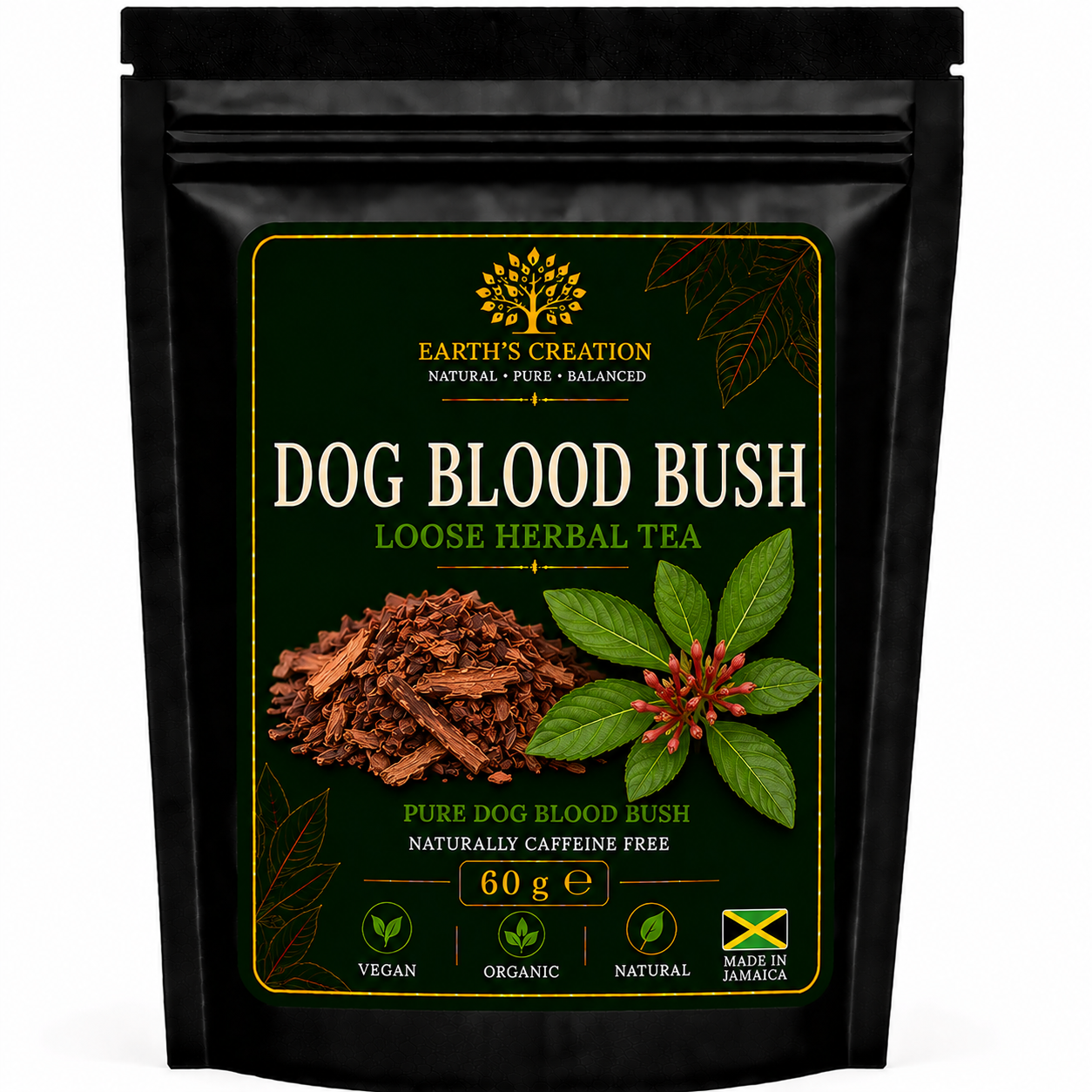
Dog Blood Bush – Powerful Traditional Jamaican Herb
Dog Blood Bush is a distinctive traditional Jamaican botanical identified as Rivina humilis. Deeply connected with Jamaican bush-herb culture, this plant is part of the rich botanical heritage found throughout Jamaica and the wider Caribbean.
The species is native to tropical and subtropical areas of the Americas, and the Royal Botanic Gardens, Kew specifically records Jamaica within its native distribution. Rivina humilis belongs to the Petiveriaceae family and grows primarily as a herb or subshrub.
For customers interested in Jamaican herbs, Caribbean botanical traditions and lesser-known plants from the region, this is a particularly fascinating addition to a traditional herbal collection.
What Is Dog Blood Bush?
The botanical name of the plant is Rivina humilis.
It is a relatively small plant with slender stems, green leaves and clusters of small flowers. As the plant fruits, it develops small berries that become a striking red or crimson colour when ripe. Kew’s botanical information describes the berries as approximately 3–4 mm in diameter and red when mature.
That colourful appearance has also contributed to another English common name associated with the species: bloodberry.
Having the scientific name on your product page is particularly useful because Caribbean plants can have several regional common names.
A Botanical Native to Jamaica
One of the strongest points we can now make about this product is its genuine geographical connection with Jamaica.
Kew records Rivina humilis as native across tropical and subtropical America, including Jamaica, the Bahamas, Cuba, Haiti, the Dominican Republic, Puerto Rico, Trinidad and Tobago, parts of the wider Caribbean, Mexico, Central America and South America.
That makes it an appropriate botanical to feature within a collection focused on Jamaican and Caribbean herbal traditions.
Rather than presenting it as simply another generic dried herb, its Jamaican identity and cultural background give the product a much more distinctive story.
Traditional Jamaican Bush-Herb Heritage
Dog Blood Bush is associated with Jamaican folk-herbal traditions, where knowledge about local plants has historically been shared between generations.
The Jamaican concept of “bush” encompasses a wide variety of locally recognised plants and traditional preparations. Individual herbs may become known through distinctive regional names that are not commonly encountered outside Jamaica or the Caribbean diaspora.
This oral and cultural tradition is one reason accurate botanical identification is so valuable.
By identifying your product as Rivina humilis, customers can connect its Jamaican common name with an internationally recognised scientific botanical name.
Rivina humilis – Botanical Identity
The scientific name Rivina humilis L. was first formally published by Carl Linnaeus in 1753.
Kew currently recognises the species as accepted and places it within:
Family: Petiveriaceae
Genus: Rivina
Species: Rivina humilis
Interestingly, Kew currently recognises Rivina as a genus containing just one accepted species: Rivina humilis.
This gives your product page useful botanical information without relying on exaggerated health claims.
The Distinctive Red Berries
One of the plant’s most attractive botanical characteristics is its fruit.
The flowers develop along slender racemes and are followed by small berries that become bright red or crimson as they mature. This characteristic helps explain why bloodberry is among the English common names recorded for the species.
The berries also contain naturally occurring pigments called betalains, which have attracted scientific research because of their colouring properties. Researchers have investigated berry extracts as potential natural food colourants.
That research concerns the berries and their extracts, however, and should not be used to make health claims about your dried herbal product.
Traditional Use and Modern Evidence
Traditional herbal knowledge and modern scientific evidence are not the same thing.
Jamaican folk traditions may associate local botanicals with particular uses, but a responsible commercial description should avoid turning those traditions into promises that the product can cure or treat medical conditions.
This is particularly important for claims involving fertility, menstruation, reproductive health or serious illnesses.
Instead, we can accurately describe the plant’s Jamaican heritage, botanical identity and traditional cultural significance while allowing customers to appreciate the history surrounding it.
Why Choose This Jamaican Botanical?
This traditional botanical may particularly interest customers exploring:
- Jamaican bush herbs
- Traditional Caribbean botanicals
- Rivina humilis
- Jamaican botanical heritage
- Caribbean plant traditions
- Individual dried herbs
- Tropical American botanicals
- Lesser-known traditional plants
Its combination of Jamaican heritage and distinctive botanical characteristics makes it noticeably different from familiar European herbs.
Explore More Jamaican Herbs
Jamaica has an exceptionally rich tradition of locally recognised botanical ingredients.
Customers discovering this plant may also be interested in other herbs strongly associated with Jamaican bush traditions.
Explore our Cerasee Bush for another distinctive botanical with a long history in Jamaican and Caribbean herbal culture.
This gives us a very natural internal product link without forcing an unrelated product into the description.
Responsible Botanical Use
Botanical products should always be used according to the directions supplied with the particular product.
It is especially important not to assume that the safety information for one portion of a plant automatically applies to every other portion or preparation.
Research has investigated preparations made specifically from Rivina humilis berries, but those findings should not automatically be extrapolated to dried leaves, stems, concentrated extracts or other preparations.
Anyone who is pregnant or breastfeeding, taking medication, managing an existing medical condition or uncertain about the suitability of an herbal preparation should obtain appropriate professional healthcare advice.
Herbal products should not replace prescribed medicines or necessary medical treatment.
Discover Traditional Dog Blood Bush
With its striking common name, Jamaican heritage and confirmed botanical identity as Rivina humilis, Dog Blood Bushprovides an interesting window into traditional Caribbean plant culture.
Its native presence in Jamaica, distinctive red berries and place among the diverse botanicals of tropical America make it a fascinating plant for customers interested in traditional Jamaican herbs.
Whether you’re discovering Jamaican bush botanicals for the first time or expanding an existing herbal collection, this distinctive plant brings genuine Caribbean botanical heritage to the range.
Explore our Cerasee Bush for another traditional Jamaican botanical with generations of Caribbean herbal heritage.
Learn more about the botanical classification and native distribution of Rivina humilis through the Royal Botanic Gardens, Kew Plants of the World Online database.
Only logged in customers who have purchased this product may leave a review.
Related products
Alkaline Herb Formulas
Liver Support Herbal Capsules | Natural Liver, Bile & Digestive Support | Plant-Based Herbal Formula

Alkaline Herb Formulas
Inflammo Liquid Herbal Tonic | Joint, Inflammation & Mobility Support | Plant-Based Herbal Formula


Alkaline Herb Formulas
Kidney Support Herbal Capsules | Natural Kidney & Urinary Tract Support.


Alkaline Herb Formulas


Alkaline Herb Formulas
Immune & Lymph Herbal Capsules | Natural Lymphatic & Immune Support & Wellness Formula

Alkaline Herb Formulas


Alkaline Herb Formulas
BRAIN FOOD Herbal Capsules | Natural Memory, Focus & Cognitive Support
Reviews
There are no reviews yet.