

 ITAL LIFE
 EARTH’S CREATION
 NACHER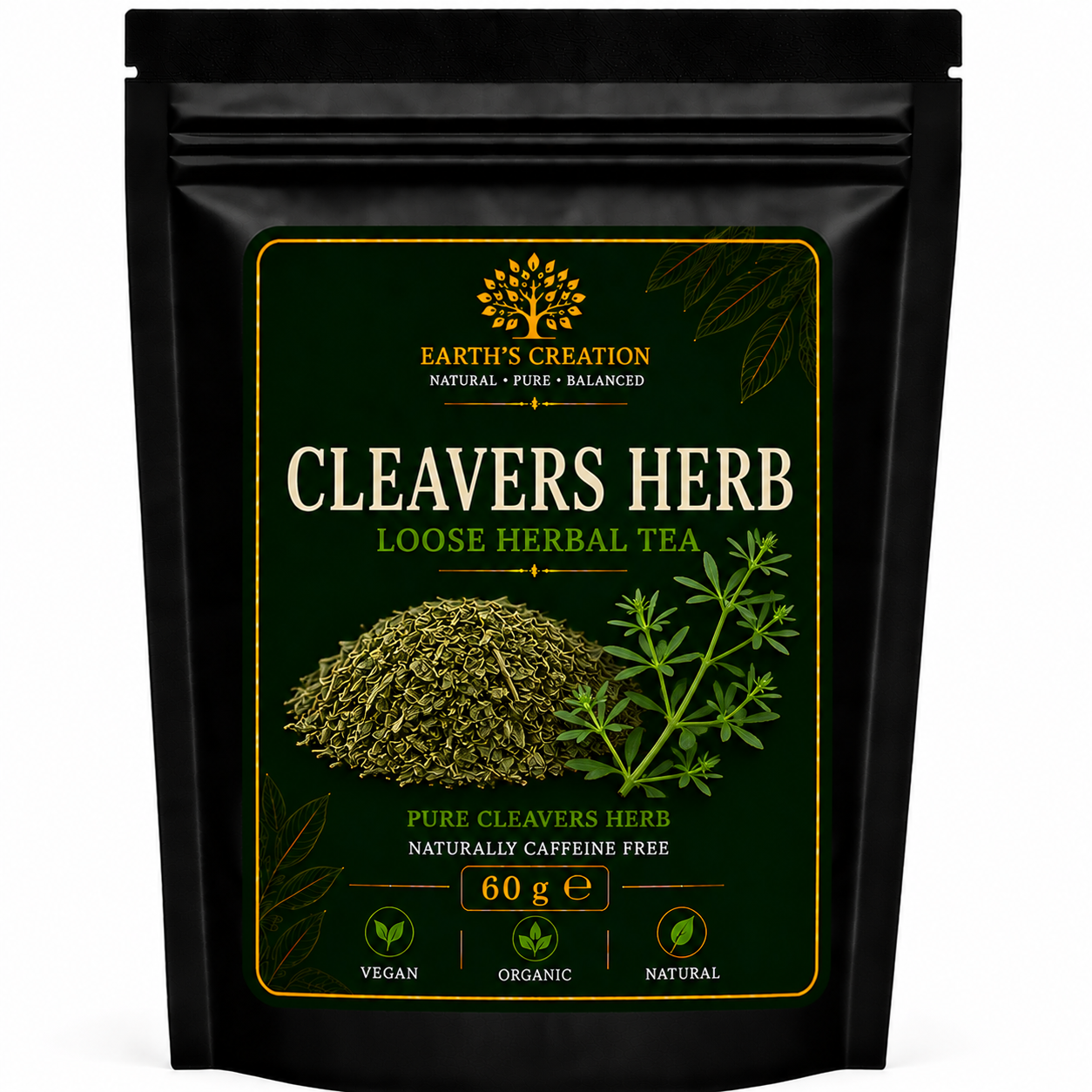
Cleavers Herb – Traditional Dried Botanical
Cleavers Herb is a traditional green botanical obtained from Galium aparine, a distinctive climbing plant recognised for its slender stems, narrow leaves and tiny hooked hairs. It has a long history within European folk-herbal traditions and remains a familiar plant to gardeners, walkers and herbal enthusiasts.
The plant is known by numerous common names, including cleavers, goosegrass, stickyweed and catchweed. Many of these names describe its unusual ability to cling to clothing, animal fur and neighbouring vegetation.
Once harvested and carefully dried, the aerial portions provide a traditional botanical ingredient suitable for appropriate herbal preparations and blends.
For customers interested in European herbs and traditional dried botanicals, cleavers offers an interesting addition to a varied herbal collection.
What Is Cleavers Herb?
Cleavers Herb commonly refers to the aerial parts of Galium aparine, a member of the Rubiaceae botanical family.
One of the most recognisable features of the plant is its ability to stick to almost anything that brushes against it. Tiny hooked hairs occur along the stems and leaves, allowing the plant to climb through surrounding vegetation.
This unusual characteristic explains several of its traditional common names.
Cleavers can be found growing in hedgerows, woodland margins, gardens and other areas with suitable conditions. During its growing season, its long stems can become intertwined with neighbouring plants.
Traditional Uses of Cleavers
Cleavers has been known within European folk-herbal practices for generations.
Historically, the aerial portions of the plant have been incorporated into various traditional preparations. The herb is particularly familiar within old European botanical traditions and continues to attract people interested in traditional plants today.
Cleavers is sometimes promoted online using strong claims concerning “detoxification” or cleansing. These descriptions should be treated carefully.
Traditional botanical use does not establish that an ordinary dried herb can remove toxins, prevent illness or treat a medical condition.
For a retail herbal product, it is better to concentrate on the plant’s traditional heritage, botanical identity and characteristics without making unnecessary medical promises.
Cleavers Herb for Herbal Preparations
Dried leafy herbs provide considerable versatility within a traditional botanical collection.
Unlike hard roots and woody bark, aerial herbs generally consist of softer plant material. Preparation methods can therefore differ considerably between different types of botanicals.
Depending on the intended use of the specific product, dried cleavers may be incorporated into appropriate herbal infusions and botanical blends.
Always follow the preparation instructions provided with your product rather than relying on directions intended for concentrated extracts, capsules or unrelated preparations.
Galium aparine – Botanical Identity
The botanical name commonly associated with cleavers is Galium aparine.
Using the scientific name alongside the common product name gives customers a more accurate way to identify the plant.
This is particularly useful because cleavers has acquired numerous regional names over the years.
You may encounter it described as:
- Goosegrass
- Stickyweed
- Catchweed
- Sticky willy
- Cleavers
- Bedstraw
Although common names vary considerably, Galium aparine provides a much more precise botanical identification.
If this is the botanical name shown on your supplier documentation, it is worth displaying it clearly on the product page.
A Distinctive Traditional Herb
Cleavers is particularly memorable because of the way the living plant grows.
The hooked hairs covering its stems and leaves allow it to cling to other plants and objects. Anyone who has walked through a patch of cleavers may have discovered pieces attached to their clothing afterwards.
This natural climbing strategy helps the relatively weak stems use surrounding vegetation for support.
Its unusual physical characteristics make Cleavers Herb an interesting botanical to explore alongside more familiar traditional leaves, roots and flowers.
Cleavers in European Herbal Traditions
Many traditional herbs sold today have histories stretching across different cultures and regions.
Cleavers is strongly associated with European folk-herbal knowledge and is a good example of how common wild plants became incorporated into traditional botanical practices.
Rather than being an exotic plant imported from distant regions, cleavers can grow abundantly in familiar environments.
Its history demonstrates that traditional herbal knowledge frequently developed around plants people encountered in their everyday surroundings.
Why Choose Cleavers Herb?
Cleavers may appeal to customers exploring traditional botanicals because of its:
- Botanical identity as Galium aparine
- Long history within European herbal traditions
- Distinctive climbing growth habit
- Traditional dried aerial-herb form
- Suitability for appropriate botanical preparations
- Interesting range of traditional common names
- Familiar place within British and European flora
- Versatility within a dried-herb collection
These characteristics make cleavers an interesting addition for customers discovering individual traditional herbs.
Building Your Herbal Collection
A varied herbal collection can include leaves, flowers, roots, bark, seeds and other botanical ingredients.
Cleavers provides a traditional green aerial herb that contrasts with aromatic flowers and heavier dried roots.
Explore our Chickweed Herb for another traditional green botanical with a long history in European herbal practices.
Keeping individual herbs also makes it easier to identify exactly which botanical ingredients are being used in each preparation.
Responsible Herbal Use
Cleavers Herb should always be used according to the directions supplied with the particular product.
Anyone who is pregnant or breastfeeding, taking medication, living with an existing medical condition or uncertain whether a botanical preparation is appropriate should seek professional healthcare advice before use.
Traditional herbal history should not be interpreted as evidence that a botanical can diagnose, prevent, treat or cure a disease.
Herbal products should not replace prescribed medicines or necessary medical treatment.
Discover Traditional Cleavers Herb
With its unusual sticky stems, European heritage and generations of traditional botanical use, Cleavers Herb provides an interesting addition to a varied dried-herb collection.
Whether you know the plant as cleavers, goosegrass or stickyweed, Galium aparine is a fascinating example of an everyday wild plant with a surprisingly extensive traditional history.
Explore our Chickweed Herb for another traditional green botanical with a long history in European herbal practices.
Learn more about the botanical classification of Galium aparine through the Royal Botanic Gardens, Kew Plants of the World Online database.
Only logged in customers who have purchased this product may leave a review.
Related products

Alkaline Herb Formulas
Multi-Mineral Herbal Capsules | Natural Mineral & Trace Element Support, and Wellness Formula


Alkaline Herb Formulas
Colon Cleanser Compound Herbal Capsules | Gut Cleanse & Bowel Wellness Formula



Alkaline Herb Formulas
Immune & Lymph Herbal Capsules | Natural Lymphatic & Immune Support & Wellness Formula


Alkaline Herb Formulas
Anti-V Herbal Capsules, Natural Immune & Antioxidant Support, Plant-Based Daily Wellness Formula


Alkaline Herb Formulas
Lung Support Herbal Capsules, Natural Respiratory & Lung Health Support


Reviews
There are no reviews yet.